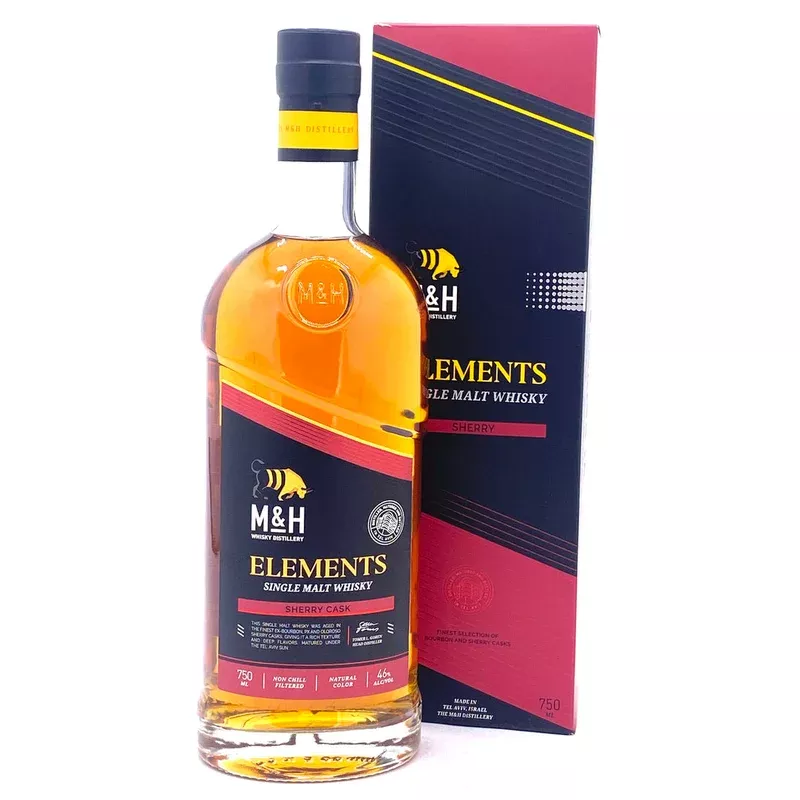
Bold yet elegant, this Israeli-made single malt channels the richness of sherry cask maturation while retaining modern finesse. With its kosher-certified pedigree, Mediterranean climate maturation and raised global profile (including a prestigious accolade at the 2023 World Whisky Awards), it offers a compelling alternative to traditional Scotch single malts.
Origins & Craftsmanship
Produced at the Milk & Honey Distillery in Tel Aviv, Israel (est. 2013), this whisky is part of their Elements series and is matured in custom-made kosher-certified Spanish sherry casks both Oloroso and Pedro Ximnez that were specially seasoned for M&H in Jerez and then shipped to Israel for ageing. The distillate is 100% malted barley, double-distilled in copper pot stills, non-chill filtered, naturally coloured and bottled at 46% ABV. The hot Mediterranean summers accelerate maturation, contributing to a distinctive flavour profile and character.
Critics Reviews
-
One reviewer noted: While it may not topple centuries-old Scotch rivals, the Elements Sherry Cask provoked intrigue: fig, plums, over-ripe red apple, oolong tea and a slow-building peppery finish.
-
The same writer assessed it as good, but not great, scoring it 8.2/10, and commented that the oak influence turns slightly dominant on the palate.
-
In addition, the bottle is marketed as the Worlds Best Single Malt at the 2023 World Whisky Awards an accolade that underscores its global recognition and ambition.
Tasting Profile
-
Nose: Rich, red-fruit led: ripe plums and cherries, over-ripe apple, framed by polished brass Notes of sandalwood, walnuts and a light tobacco husk follow.
-
Palate: Medium-bodied but full of character the sherry cask influence brings fruit-cake sweetness, dark chocolate, dried fig and caramel. Underneath lies a slow build of warm spice, cracked ginger and gentle oak tannin.
-
Finish: The dark chocolate and dried fruit linger, then fade into tobacco leaf, light oak char and a subtle saline echo from the distillerys coastal climate. Some bitter-oak seasoning may emerge toward the very end.